“REST EASY, DOLLY.” — WHEN REBA McENTIRE LET ONE FINAL SONG CARRY A LIFETIME OF FRIENDSHIP
Introduction
Some goodbyes arrive beneath bright lights, surrounded by applause and carefully chosen words. Others seem to ask for almost nothing at all—one familiar voice, one quiet melody, and a few seconds of silence when no one is willing to disturb what has just been felt. That is the emotional center of this imagined, dramatized tribute, “REST EASY, MY FRIEND.” — REBA McENTIRE’S FINAL SONG FOR DOLLY PARTON LEFT THE ROOM IN SILENCE 💔🎶.
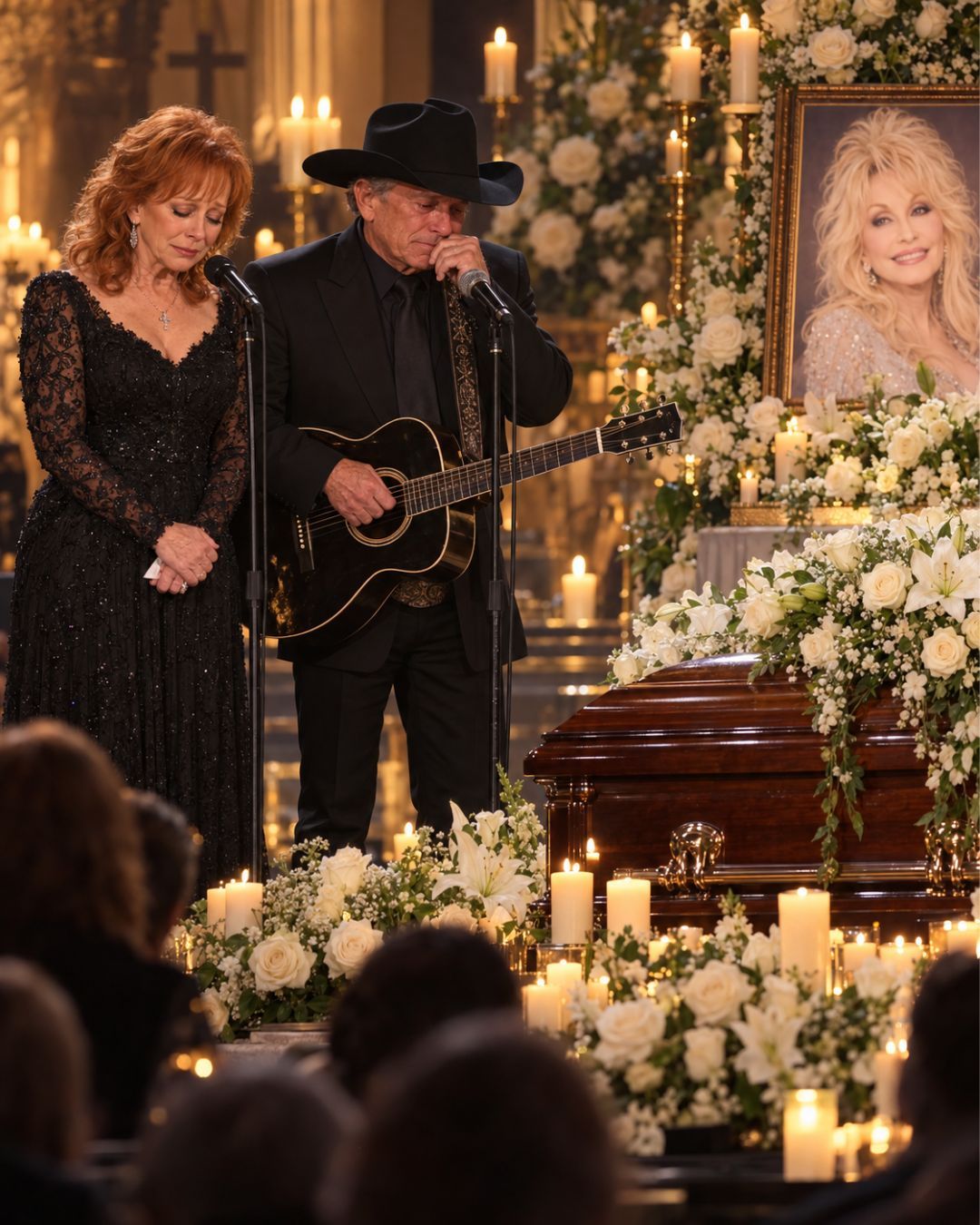
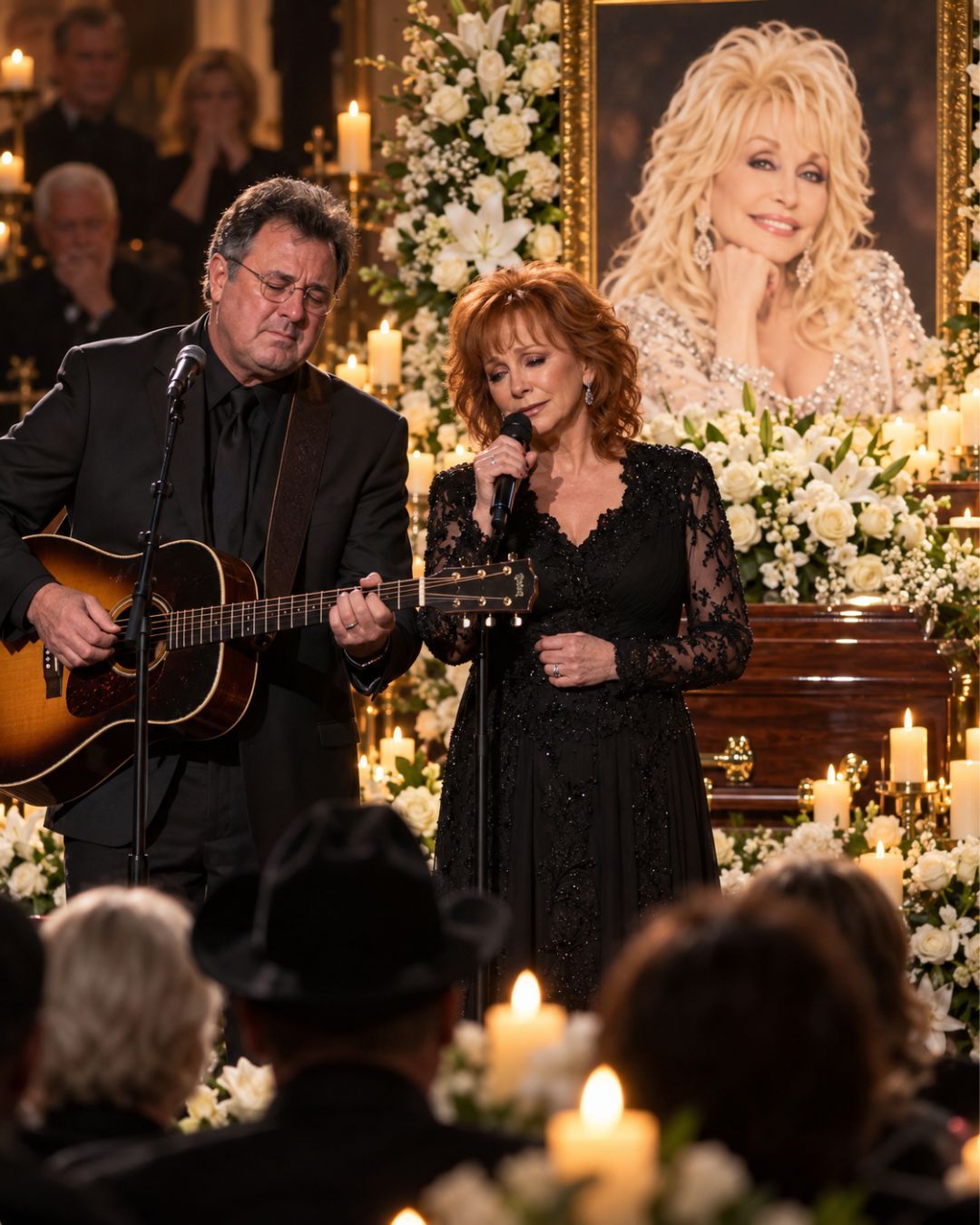
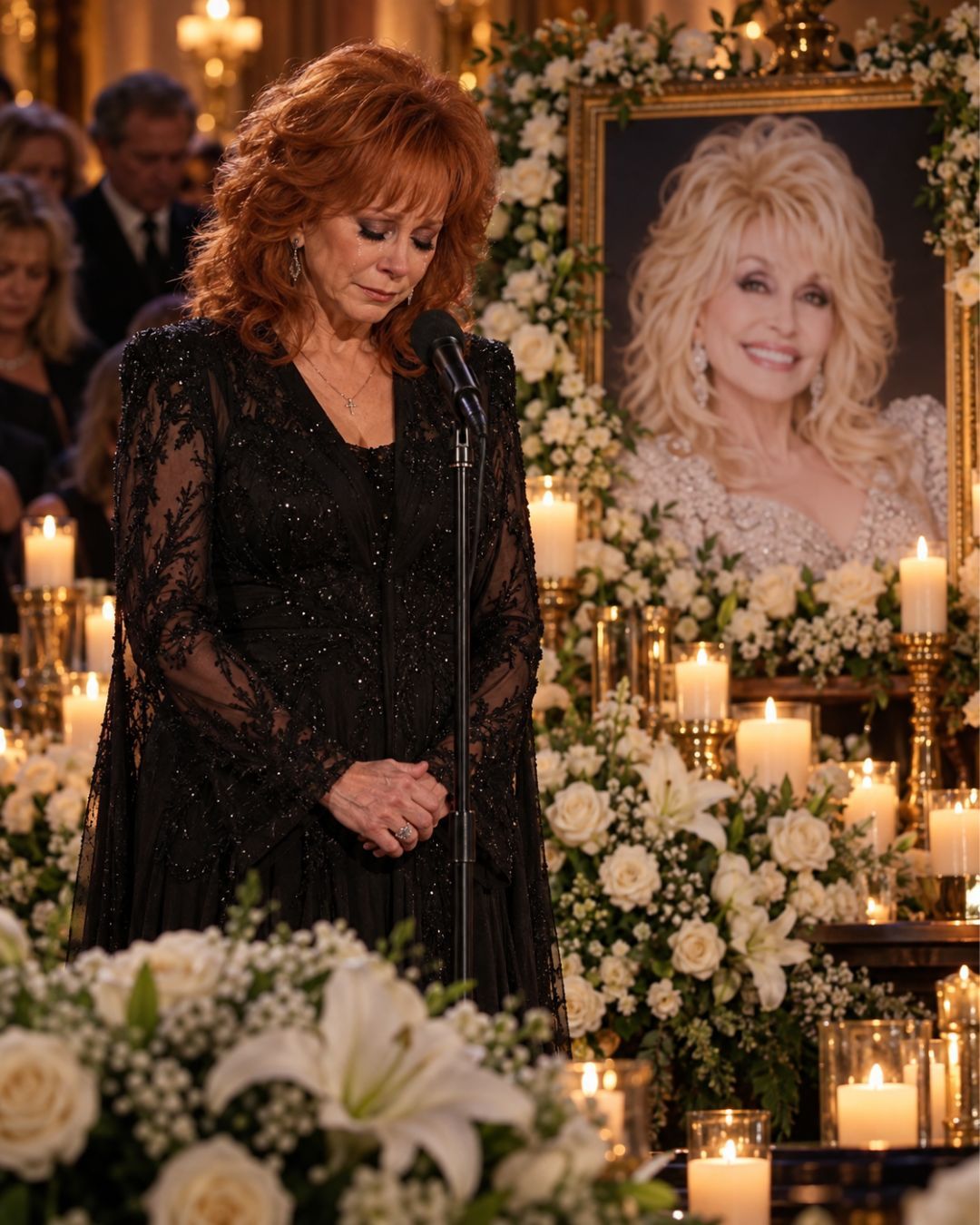
In this reflective scene, Reba McEntire walks slowly toward the microphone without a grand introduction. There is no elaborate staging, no dramatic announcement, and no attempt to make grief appear larger than it already is. Reba simply stands beneath the lights with her eyes lowered, carrying with her decades of country music history, admiration, friendship, and memory.
Then the first notes begin.
Reba has always possessed one of country music’s most recognizable emotional gifts: the ability to sound strong without becoming distant and vulnerable without losing dignity. Her voice can fill an arena, yet at its most powerful it often feels like a conversation between two people who have known each other for years. In this imagined farewell to Dolly Parton, that intimacy becomes everything.

Each line seems to arrive more carefully than the one before it.
There is no rush.
No attempt to overpower the room.
Instead, the performance feels shaped by gratitude. Dolly was more than an extraordinary singer and songwriter. She represented the Smoky Mountains, family, faith, humor, hardship, generosity, determination, and an unmistakable belief in remaining true to oneself. Her songs could travel across generations because they were rooted in experiences that ordinary people understood: home, loss, hope, sacrifice, and the complicated ways memory stays with us.
Reba understands that kind of storytelling.
Both Reba McEntire and Dolly Parton became larger-than-life figures while somehow preserving a sense of familiarity. Their voices came from different places and their careers followed different paths, but both women learned how to turn personal experience into music that listeners could carry into their own lives.
That shared understanding gives this imagined final song its emotional weight.
As Reba approaches the closing line, her voice grows quieter rather than louder. She pauses for a moment, as though the words have become more difficult to release.

Then she sings the final phrase.
The note fades.
Reba does not immediately move.
She keeps her eyes lowered and allows the silence to remain.
No applause comes at first.
For several long seconds, the room feels suspended between memory and goodbye.
Then, softly, Reba says:
“Rest easy, my friend.”
Nothing more is necessary.
By that point, it no longer feels like Reba McEntire performing for an audience. It feels like one old friend speaking privately to another—offering love, gratitude, respect, and farewell through the only language large enough to hold them all.
One voice.
One final song.
One silence no one wants to break.
And the feeling that while the performance has ended, Dolly Parton’s place in country music—and in the memories of those who loved her music—has not.